 Stedge Sports is a manufacturer of custom sportswear and apparel.

How to Measure Your Team for Custom Sports Uniforms (Avoid Costly Sizing Mistakes)

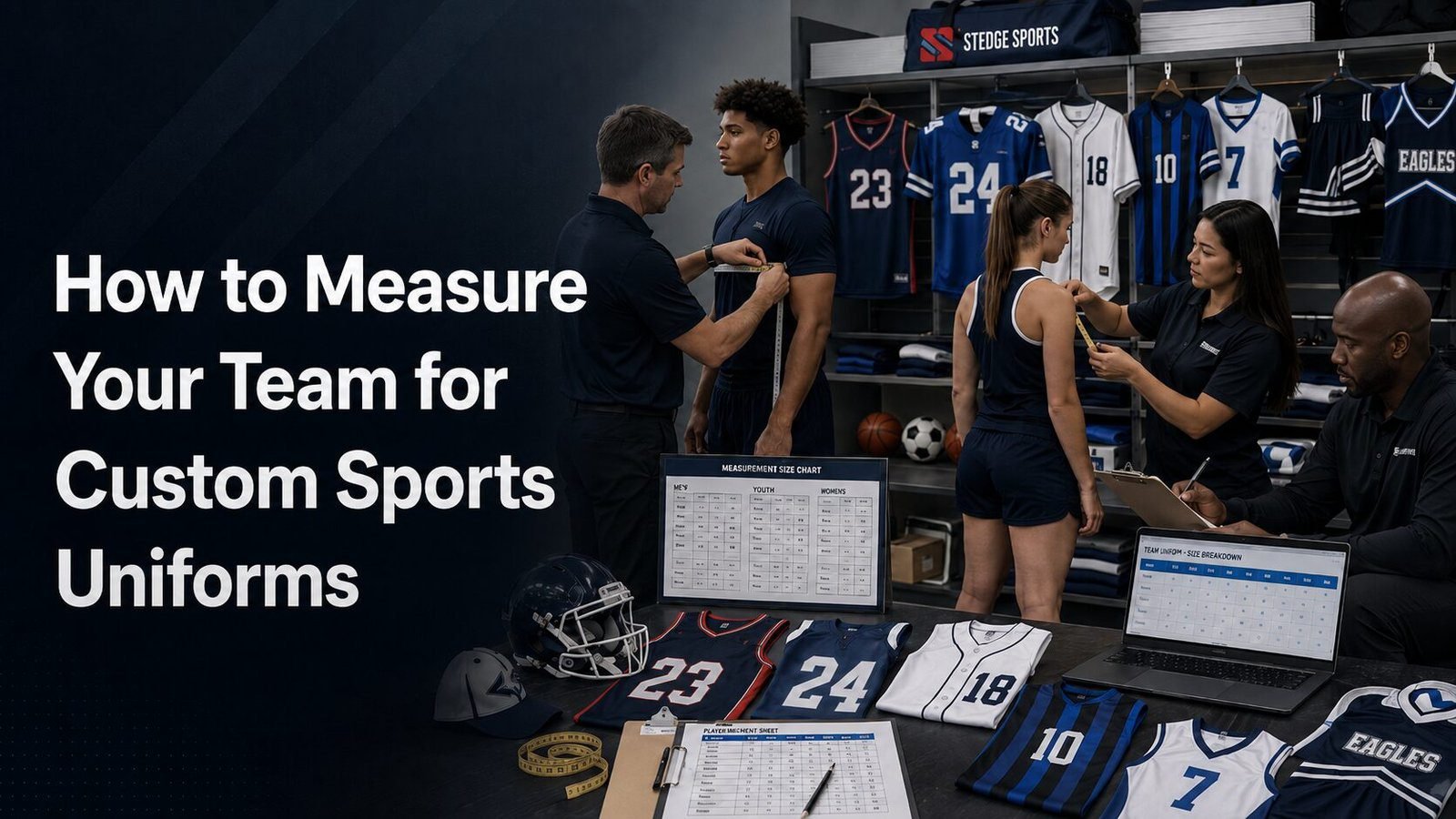
Ordering custom sports uniforms involves more than selecting colors, logos, and designs. One of the most important steps is making sure every team member receives the correct size.
For schools, sports clubs, universities, and organizations, sizing mistakes can lead to unnecessary delays, additional costs, and dissatisfied players. A single incorrect measurement may seem minor, but across an entire team, those errors can quickly affect the success of the project.
The good news is that most sizing problems are preventable.
By following a structured measurement process and verifying information before production begins, buyers can place orders with greater confidence and reduce the likelihood of costly revisions later.
Whether you’re ordering uniforms for a youth league, a college athletics program, or a corporate sports event in the USA, accurate measurements help ensure every athlete is ready to perform comfortably from day one.
What’s the Best Way to Measure a Team for Custom Sports Uniforms?
The most reliable approach is to collect accurate player measurements, compare them with the manufacturer’s sizing chart, verify the team roster, and assign one person to review all sizing information before approving the order.
Rather than estimating sizes or relying on previous seasons, organizations that use a consistent measurement process are more likely to receive uniforms that fit correctly and reduce the need for replacements or adjustments.
Why Accurate Measurements Matter
Every custom uniform is produced according to the information approved before manufacturing begins.
If measurements are inaccurate, the final product may not fit as expected, even when the manufacturing process is completed correctly.
For organizations ordering uniforms for multiple teams, accurate sizing helps:
- Improve player comfort and confidence.
- Reduce the need for replacement orders.
- Keep production moving without unnecessary revisions.
- Support a smoother distribution process.
- Maintain consistency across the entire organization.
Taking time to confirm measurements before placing an order is one of the simplest ways to reduce purchasing risks.
Buyer Insight: The most successful team orders are usually the best organized, not necessarily the largest.
Who Should Be Responsible for Team Measurements?
When multiple people collect sizing information independently, inconsistencies can occur.
For this reason, many schools, clubs, and organizations appoint a single coordinator to manage the process.
This person may be:
- An athletic director.
- A team coach.
- A procurement officer.
- A club manager.
- An event coordinator.
Having one person review all measurements before submitting the order helps ensure the information is complete, accurate, and consistent across every team.
If your organization is coordinating uniforms for several sports, our guide on Bulk Ordering Custom Sports Uniforms explains how assigning clear responsibilities can simplify the entire purchasing process.
Common Sizing Mistakes Buyers Make
Most sizing issues are caused by preparation rather than manufacturing.
Some of the most common mistakes include:
- Guessing player sizes instead of measuring.
- Reusing measurements from previous seasons.
- Mixing different sizing standards.
- Submitting incomplete size lists.
- Forgetting to verify measurements before approval.
These small oversights can become costly once production begins, especially for larger team orders.
Professional Buyer’s Tip
Don’t rely on last season’s uniform sizes. Young athletes grow quickly, and even adult teams may experience roster changes or differences in fit preferences. Collect updated measurements before every new custom uniform order to reduce sizing issues and improve player satisfaction.
Key Takeaway
Accurate measurements aren’t just about getting the right fit—they’re about protecting your investment.
A structured sizing process helps schools, clubs, and organizations avoid preventable mistakes while creating a smoother production experience from the first measurement to final delivery.
Should You Request a Manufacturer’s Size Chart?
One of the biggest sizing mistakes organizations make is assuming that every manufacturer follows the same sizing standard.
In reality, sizing can vary between manufacturers, product collections, and garment styles. A medium jersey from one supplier may fit differently than a medium from another.
Before collecting measurements, always request the manufacturer’s sizing chart for the specific products you plan to order.
A size chart allows buyers to compare player measurements against the recommended sizing instead of relying on assumptions.
When reviewing a sizing chart, pay attention to:
- Chest measurements
- Waist measurements
- Height recommendations
- Garment fit (Regular, Athletic, or Relaxed)
- Youth and adult size differences
Using the correct size chart before approving production helps reduce sizing errors and gives players a more comfortable fit.
Professional Buyer’s Tip: If your organization is ordering multiple product types, such as jerseys, shorts, hoodies, or warm up jackets, confirm whether each product uses the same sizing chart. Different garments may have different fit specifications.
How Schools & Clubs Collect Team Measurements Efficiently
Large organizations rarely collect measurements one player at a time without a plan.
Instead, they follow a simple process that keeps information organized and easy to review before production begins.
A practical workflow looks like this:
Step 1: Assign One Coordinator
Choose one person to manage the measurement process and communicate with the manufacturer.
Step 2: Schedule a Measurement Session
Measure players during practice, preseason registration, or a team meeting to ensure consistency.
Step 3: Record Every Player’s Information
Collect measurements using one standardized form rather than separate notes or messages.
Step 4: Verify the Data
Before submitting the order, review player names, jersey numbers, and measurements with coaches or team managers.
Step 5: Match Measurements to the Manufacturer’s Size Chart
Select the appropriate size based on the manufacturer’s recommendations rather than personal preference or previous uniforms.
This structured approach minimizes confusion and helps buyers submit complete, accurate information.
Team Measurement Collection Sheet
To simplify large uniform orders, use a standardized measurement sheet before requesting a quotation.
| Player Name | Jersey # | Sport | Height | Chest | Waist | Recommended Size | Notes |
This simple worksheet helps schools, clubs, and organizations:
- Keep all player information in one place.
- Reduce duplicate or missing data.
- Verify sizing before production approval.
- Simplify communication with the manufacturer.
- Create a record for future reorders.
Buyer Insight: Saving your completed measurement sheet after production makes future orders much easier, especially when adding new players or replacing uniforms.
What Coaches Should Verify Before Approving the Order
Before giving final approval, review the completed order one last time.
Confirm that:
- Every player has been included.
- Jersey numbers are correct.
- Names are spelled accurately.
- Measurements have been reviewed.
- Sizes match the manufacturer’s chart.
- Team branding has been approved.
- Delivery expectations are confirmed.
Taking a few extra minutes at this stage can prevent delays, production changes, and unnecessary replacement orders later.
If your organization is preparing a large purchase, our Production Timeline Guide for Custom Sports Uniforms explains how accurate approvals help keep manufacturing on schedule.
Key Takeaway
Accurate sizing starts with organization, not guesswork.
Schools, clubs, universities, and organizations that follow a structured measurement process, use the manufacturer’s sizing chart, and verify every detail before production are far more likely to receive uniforms that fit correctly the first time.
Frequently Asked Questions
Should every player be measured individually?
Yes. Individual measurements provide the most accurate sizing information. Even players of similar height or age may require different uniform sizes depending on their body measurements and preferred fit.
Can we use last season’s uniform sizes?
It’s not recommended. Players, especially youth athletes, can grow significantly between seasons, and adult team rosters often change. Collecting updated measurements before each order helps reduce sizing issues.
What measurements are usually required?
Most manufacturers recommend collecting basic measurements such as height, chest, and waist, then comparing them with the official sizing chart for the specific product being ordered. If you’re preparing your first custom uniform project, our Complete Buyer’s Guide to Custom Sports Uniforms can help you understand the broader ordering process.
Should we request a sample before placing a large order?
For larger projects or first-time orders, requesting a sample can help buyers evaluate sizing, fabric, and overall fit before approving full production.
Who should approve the final sizing list?
Assigning one project coordinator, such as an athletic director, coach, or procurement manager, helps ensure all measurements, player details, and size selections are reviewed before production begins.
How can we reduce sizing mistakes?
Use the manufacturer’s sizing chart, collect current player measurements, verify all information before submission, and keep one organized measurement sheet for the entire project.
Conclusion
Accurate sizing is one of the most important parts of a successful custom sports uniform order. By collecting current player measurements, using the manufacturer’s sizing chart, organizing team information, and reviewing the final sizing list before production, schools, clubs, universities, and organizations can reduce preventable mistakes and create a smoother ordering process. Taking the time to confirm sizing before manufacturing begins can help avoid unnecessary replacements, delays, and additional costs while ensuring players receive uniforms that fit comfortably and perform as expected.
Make Every Uniform Order Start with Accurate Measurements
The success of a custom sports uniform project begins long before production. Accurate measurements, organized team information, and a clear approval process help ensure every player receives the right fit while reducing the risk of delays or costly revisions.
Whether you’re coordinating uniforms for a school, university, sports club, community league, or corporate team in the USA, investing time in proper sizing creates a smoother ordering experience and greater confidence throughout the project.
At Stedge Sports, we encourage every customer to prepare complete team measurements before production begins. By combining careful planning with professional manufacturing and clear communication, we help organizations create custom uniforms that fit comfortably and represent their teams with confidence.
If you’re preparing your next custom sports uniform order, visit our Home Page to explore our products or connect with our team for guidance on planning your project.