 Stedge Sports is a manufacturer of custom sportswear and apparel.

How Long Does It Take to Make Custom Sports Uniforms? Production Timeline Explained

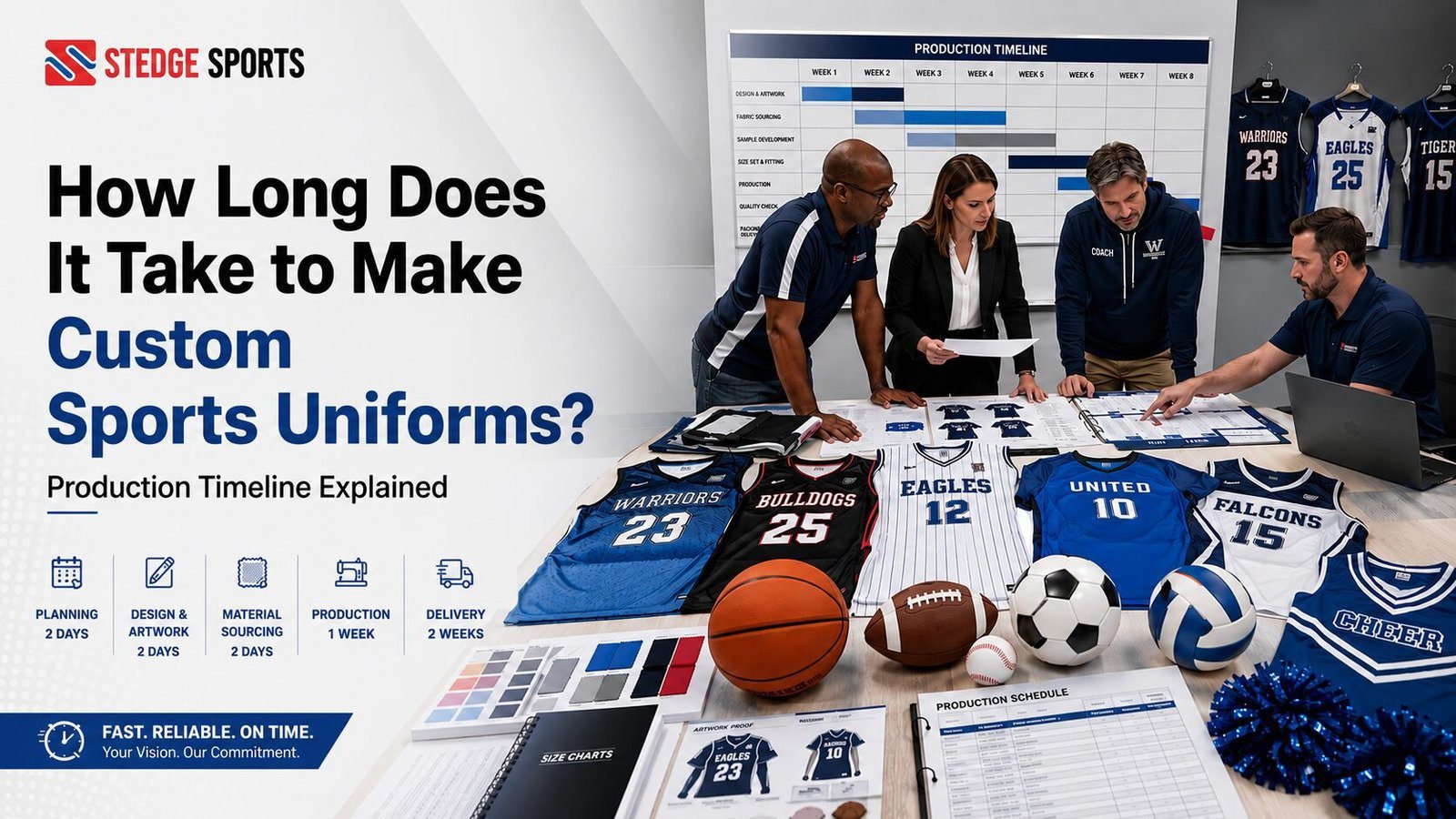
For schools, sports clubs, universities, and organizations, timing is just as important as quality. A well designed uniform loses its value if it arrives after the first game, tournament, or event.
One of the most common questions buyers ask before placing an order is:
“How long will production take?”
The answer depends on more than the manufacturing process. Artwork approval, order details, customization requirements, production scheduling, and shipping all influence when your uniforms will be ready.
Whether you’re preparing for a new sports season, a championship tournament, or a corporate event in the USA, understanding the production timeline helps you plan ahead, reduce unnecessary stress, and avoid last minute decisions.
This guide explains what happens after you place an order, the stages that influence delivery, and the practical steps buyers can take to keep their project moving on schedule.
How Long Does It Take to Produce Custom Sports Uniforms?
Production timelines vary because every order is different.
The total time depends on factors such as design approval, order quantity, customization, manufacturing capacity, quality inspections, and shipping arrangements.
Rather than focusing on a fixed number of days, buyers should understand the complete process and begin planning well before uniforms are needed. Early preparation gives both the buyer and the manufacturer enough time to complete each stage without unnecessary pressure.
Why Every Production Timeline Is Different
No two custom uniform projects are exactly alike.
A school ordering uniforms for one basketball team has different requirements than a university purchasing apparel for multiple sports or a company organizing a nationwide tournament.
Production schedules are influenced by several factors, including:
- The number of uniforms being ordered.
- The level of customization required.
- Artwork approval time.
- Sample approval (if requested).
- Manufacturing workload.
- Shipping destination.
Instead of asking “How many days will production take?”, experienced buyers usually ask:
- What information do you need before production begins?
- Which stage takes the most time?
- How can we avoid delays?
- When should we approve artwork?
- What happens if changes are requested after production starts?
These questions help create realistic expectations and reduce unnecessary revisions later.
Buyer Insight: The fastest projects are usually the ones that are well planned before manufacturing begins.
What Happens After You Approve Your Order?
Many buyers assume production starts immediately after accepting a quotation.
In reality, several important steps take place before manufacturing begins.
Your manufacturer typically reviews the approved artwork, confirms product specifications, verifies quantities, checks player names and numbers, and ensures all production details are complete.
This preparation stage is one of the most important parts of the process because it helps prevent mistakes during manufacturing.
Before production starts, buyers should confirm:
- Final player roster.
- Size breakdown.
- Team colors.
- Logo placement.
- Player names and numbers.
- Delivery expectations.
Making changes after production begins is often more complicated than reviewing everything carefully beforehand.
If you’re preparing your first custom order, our guide on How to Order Custom Sportswear explains how organizing these details early can simplify the entire purchasing process.
The Five Stages of Custom Sports Uniform Production
Understanding the production journey helps buyers know what to expect after approving their order.
| Production Stage | What the Buyer Does | What the Manufacturer Does |
| Project Confirmation | Approves quotation and requirements | Reviews project specifications |
| Artwork Approval | Confirms final design | Prepares production-ready artwork |
| Sample Review (If Required) | Reviews sample and provides approval | Produces and adjusts sample if needed |
| Manufacturing & Quality Inspection | Receives progress updates | Produces, inspects, and prepares uniforms for shipment |
| Shipping & Delivery | Receives tracking information | Dispatches completed order |
Understanding the complete custom sportswear manufacturing process can also help buyers see how each production stage fits together and why proper planning reduces delays.
Every stage contributes to the overall timeline. Completing each step carefully helps reduce the likelihood of production interruptions later.
Key Takeaway
Production timelines aren’t determined by manufacturing alone.
They depend on preparation, communication, timely approvals, and accurate project information. Buyers who complete these steps early often experience smoother production and greater confidence throughout the ordering process.
What Usually Causes Production Delays?
Most production delays don’t happen because manufacturers are working slowly. They happen because important project details aren’t finalized before production begins or because changes are requested after approval.
Understanding these common challenges helps buyers plan more effectively and keeps the project moving smoothly.
Last-Minute Design Changes
Once artwork has been approved and production is scheduled, making changes to logos, colors, player names, or garment specifications can affect the production timeline.
Before giving final approval, review every detail carefully with your team. Taking a little extra time at this stage often prevents unnecessary delays later.
Incomplete Team Information
Missing player names, incorrect jersey numbers, or incomplete size lists can slow down production because manufacturers need complete and accurate information before manufacturing begins.
Preparing your roster before requesting production approval makes the process much more efficient.
Delayed Artwork Approval
Every production schedule depends on timely approvals.
If artwork remains under review for several days while internal decisions are being made, manufacturing cannot move forward.
Assigning one decision maker to coordinate approvals often helps schools, clubs, and organizations keep projects on schedule.
Unrealistic Delivery Expectations
Sometimes buyers contact manufacturers only a few weeks before the start of a season or tournament.
While every supplier tries to accommodate customer requirements, allowing sufficient planning time gives more flexibility for production, quality inspections, and shipping.
Buyer Insight: Most production delays can be minimized through early planning, clear communication, and timely approvals, not by rushing manufacturing.
How Schools, Clubs & Organizations Keep Projects on Schedule
Organizations that consistently receive their uniforms on time usually follow a structured planning process long before production begins.
Instead of waiting until fixtures, tournaments, or school calendars are finalized, they prepare key project information in advance.
Successful buyers often:
- Finalize team rosters early.
- Confirm player sizes before requesting production.
- Prepare logo files and brand colors.
- Assign one person to communicate with the manufacturer.
- Review artwork carefully before approval.
- Leave enough time for manufacturing and shipping.
This proactive approach reduces unnecessary revisions and allows manufacturers to focus on producing the order rather than resolving missing information.
If you’re still comparing suppliers, our guide on Choosing the Right Sportswear Manufacturer explains why communication and production planning are just as important as product quality.
Can Rush Orders Be Completed?
Every buyer hopes their project can be completed as quickly as possible, especially when a season or event is approaching.
Whether a rush order can be accommodated depends on several factors, including production capacity, the complexity of the design, material availability, and the current manufacturing schedule.
Instead of assuming every project can be accelerated, discuss your required delivery date during your first conversation with the manufacturer.
Choosing an experienced sportswear manufacturer with organized production planning can make scheduling more predictable and improve communication throughout the project.
Helpful questions include:
- Is our timeline realistic?
- Are there any production constraints we should know about?
- Would simplifying certain customization options improve scheduling?
- What happens if our event date changes?
Open communication allows both parties to identify practical solutions without compromising quality.
A Simple Production Timeline Example
Although every project is different, a typical custom sports uniform order follows a structured workflow.
| Stage | Typical Buyer Activity |
| Project Planning | Finalize team requirements and request a quotation |
| Design Approval | Review artwork and approve the final layout |
| Production Preparation | Confirm sizes, player details, and specifications |
| Manufacturing | Uniforms move through production and quality inspection |
| Shipping | Order is dispatched and prepared for delivery |
The exact duration of each stage depends on your project, but following this sequence helps buyers understand where their order is throughout the process.
Why Communication Is Part of the Production Timeline
Many buyers focus only on manufacturing, but clear communication is just as important.
Responding quickly to artwork approvals, confirming player details, and asking questions early all contribute to a smoother production experience.
Rather than viewing the manufacturer as only a supplier, treat them as a project partner who can help identify potential issues before they become delays.
For organizations placing recurring orders, establishing a reliable communication process can simplify future projects and improve consistency across every season.
Key Takeaway
The production timeline begins long before the first piece of fabric is cut.
Well organized buyers who prepare their information, approve artwork promptly, and communicate clearly with their manufacturer are far more likely to receive their uniforms on schedule and with fewer revisions.
Production Planning Checklist Before You Place Your Order
A successful custom sports uniform project starts with preparation. Completing the checklist below before requesting a quotation helps reduce production delays and improves communication with your manufacturer.
Project Planning
✓ Confirm your final team roster.
✓ Decide how many uniforms you need for players, coaches, and staff.
✓ Set a realistic delivery deadline based on your season or event schedule.
✓ Determine whether you may need additional uniforms later.
Design Preparation
✓ Finalize your logo and brand colors.
✓ Confirm player names and jersey numbers.
✓ Review the uniform design before submitting it for approval.
✓ Prepare high-quality artwork files whenever possible.
Production Details
✓ Verify your size breakdown.
✓ Decide whether a production sample is required.
If you’re unsure whether a sample is necessary, our guide on How to Order Custom Sportswear explains how the sample approval stage helps reduce production mistakes before bulk manufacturing begins.
✓ Confirm customization requirements before manufacturing begins.
✓ Review the expected production and shipping schedule.
Communication
✓ Assign one contact person for approvals.
✓ Respond promptly to artwork reviews.
✓ Ask about production updates during manufacturing.
✓ Confirm shipping details before dispatch.
A well organized project not only helps manufacturers work more efficiently but also gives buyers greater confidence throughout the ordering process.
Frequently Asked Questions
When should we place an order for custom sports uniforms?
The best time to begin is well before your season, tournament, or event. Early planning allows enough time for quotations, artwork approval, production, quality inspection, and shipping without unnecessary pressure.
What information does a manufacturer need before production begins?
Most manufacturers require your approved artwork, player roster, size breakdown, quantities, customization details, and delivery expectations before production can begin.
Can changes be made after production starts?
Small adjustments may be possible before manufacturing begins, but once production is underway, changes become much more difficult. Reviewing all project details before approval helps avoid delays and additional costs.
Understanding the custom sportswear manufacturing process also helps explain why design approvals are completed before bulk production begins.
Does ordering more uniforms increase production time?
Not always. Production timelines depend on several factors, including order complexity, manufacturing capacity, customization requirements, and scheduling. Discuss your project with the manufacturer to receive the most accurate estimate.
Can schools and clubs request production updates?
Yes. Maintaining regular communication with your manufacturer helps buyers stay informed throughout the production process and quickly address any questions that arise.
Are rush production requests always available?
Rush production depends on manufacturing capacity, material availability, and your project’s requirements. If you have a strict deadline, discuss it with the manufacturer as early as possible.
How can we reduce the risk of delays?
Providing complete project information, approving artwork promptly, confirming player details early, and maintaining clear communication throughout production are some of the most effective ways to keep your order on schedule.
Conclusion
A successful custom sports uniform project depends on much more than manufacturing speed. Careful planning, timely artwork approvals, accurate team information, clear communication, and realistic production expectations all contribute to a smooth ordering experience. By understanding each stage of the production timeline and working closely with a reliable manufacturing partner, schools, clubs, universities, and organizations can reduce delays, improve coordination, and ensure their uniforms arrive ready for the season.
Keep Your Project on Schedule with Stedge Sports
Ordering custom sports uniforms isn’t only about choosing the right design, it’s about planning your project so every stage, from artwork approval to final delivery, runs smoothly.
Whether you’re preparing uniforms for a school, sports club, university, community organization, or corporate team in the USA, understanding the production timeline helps you make informed decisions and reduce unnecessary stress before the season begins.
At Stedge Sports, we work closely with every customer to review project requirements, production planning, customization details, and delivery expectations before manufacturing starts. This collaborative approach helps create a more efficient process while maintaining consistent quality from the first discussion through final delivery.
If you’re planning your next custom sports uniform order or would like to discuss your project timeline, visit our Home Page and connect with our team for personalized assistance.