 Stedge Sports is a manufacturer of custom sportswear and apparel.

Minimum Order Quantity (MOQ) for Custom Sports Uniforms: What Schools, Clubs & Teams Need to Know

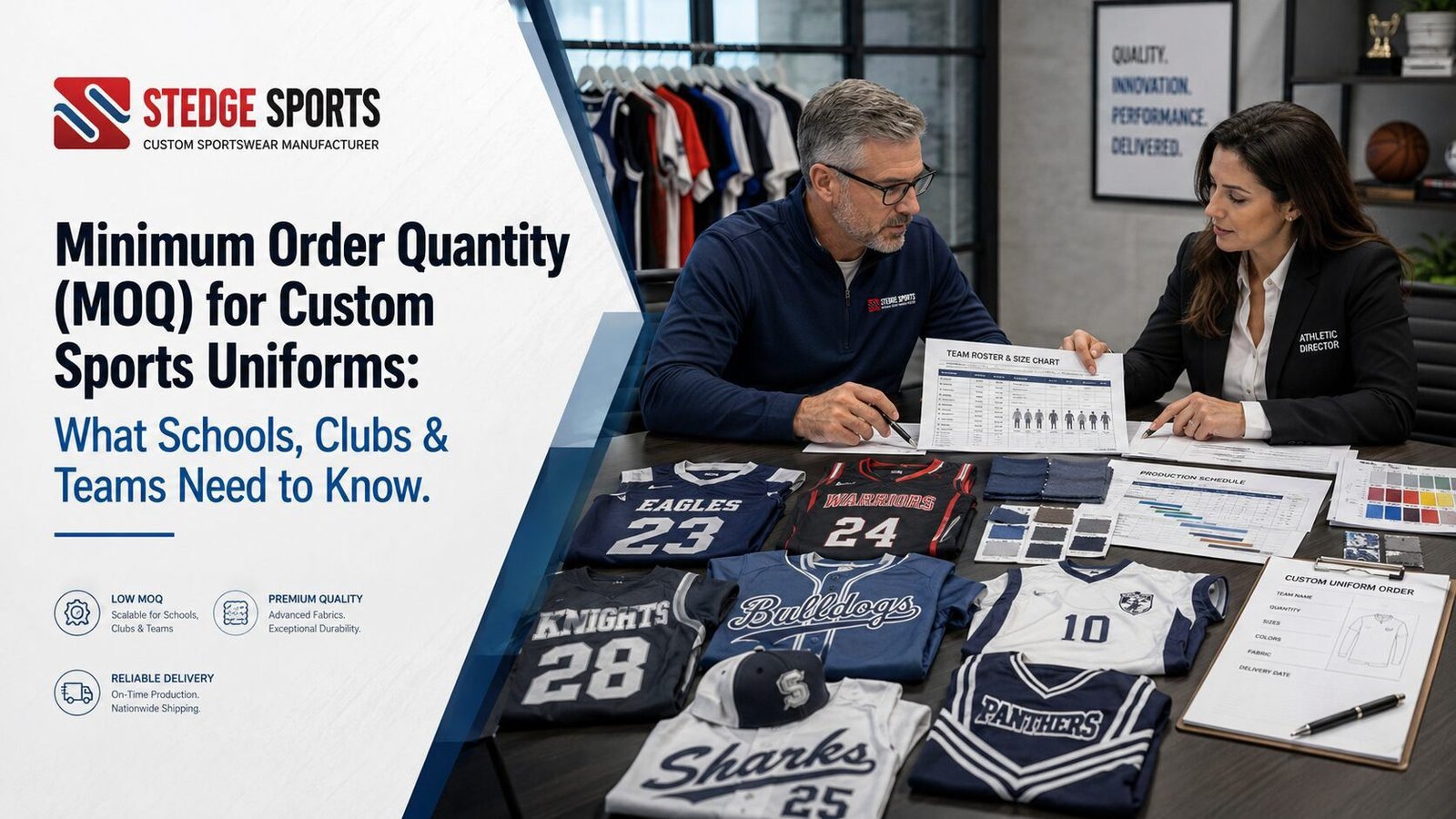
Ordering custom sports uniforms isn’t always as simple as deciding how many players are on your roster.
Many buyers begin the quotation process expecting to order exactly what they need, only to discover that manufacturers have minimum production requirements. That often raises practical questions.
Can we order uniforms for just one team?
What if new players join later?
Can we mix different sizes?
Will ordering a few extra uniforms save us time and money in the future?
These are common concerns for schools, sports clubs, community organizations, and growing brands across the USA. Understanding how manufacturers plan production helps you prepare a more efficient order while avoiding unnecessary delays or unexpected costs.
Rather than viewing minimum order quantity as a restriction, think of it as part of the production planning process. Once you understand how it affects manufacturing, it becomes much easier to discuss options with suppliers and choose an ordering strategy that fits your organization.
Can Small Teams Still Order Custom Sports Uniforms?
Yes—but the answer depends on the manufacturer’s production process and your project requirements.
Some manufacturers are equipped to handle smaller custom orders, while others focus on larger production runs. Instead of assuming your order is too small, discuss your requirements early in the quotation process.
When speaking with a supplier, explain:
- The number of players on your current roster.
- Whether additional players are expected later.
- If you need matching apparel beyond game uniforms.
- Whether future repeat orders are likely.
Providing this information allows the manufacturer to recommend the most suitable production approach instead of offering a one-size-fits-all solution.
Why Manufacturers Set Minimum Order Quantities
When buyers hear the term minimum order quantity, it’s easy to assume it’s simply a sales policy. In reality, it usually reflects how custom production is organized.
Before manufacturing begins, suppliers prepare artwork, configure equipment, source materials, schedule production, and perform quality checks. Those preparation steps are similar whether you’re ordering 20 uniforms or 200.
That’s why manufacturers often establish minimum production levels—to make the manufacturing process efficient while maintaining consistent quality.
Understanding this helps buyers have more productive conversations with suppliers. Instead of negotiating around the number itself, focus on discussing your project’s needs and asking what options are available.
Buyer Insight: Minimum order quantities are often linked to production efficiency—not the value of your business.
Is Your Team Ready to Place an Order?
Before requesting a quotation, it’s worth reviewing whether your team has all the information needed for a smooth production process.
Consider these questions:
- Has your final player roster been confirmed?
- Do you already have approved team branding?
- Are player names and numbers finalized?
- Have coaches approved the uniform design?
- Is your delivery deadline realistic?
The more decisions you make before requesting a quotation, the easier it becomes for suppliers to provide accurate pricing and production schedules.
If your organization is still planning its first custom uniform order, our guide on The Complete Buyer’s Guide to Custom Sports Uniforms walks through the entire purchasing process from supplier selection to final delivery.
How Smart Buyers Plan for Team Growth
One of the most common situations schools and clubs face is roster changes after uniforms have already been ordered.
New players join.
Reserve teams expand.
Additional staff require branded apparel.
Rather than treating these as unexpected challenges, experienced buyers discuss future growth during the first conversation with the manufacturer.
Helpful questions include:
- Can matching uniforms be produced later?
- Will our approved artwork be kept on file?
- Can future orders use the same colors and materials?
- Is there a recommended quantity to order now for future flexibility?
Planning ahead doesn’t always mean ordering more immediately. It means understanding how future orders will be managed so your team maintains a consistent appearance throughout the season.
Key Takeaway
Minimum order quantity shouldn’t be viewed as an obstacle.
Instead, it should be part of a broader discussion about production planning, future team growth, and long-term purchasing strategy. Buyers who ask the right questions early are usually the ones who experience smoother production, fewer delays, and better consistency across future orders.
Can You Mix Sizes, Player Names & Numbers in One Order?
One concern many schools, clubs, and organizations have is whether every uniform needs to be identical. In reality, most teams require a variety of sizes and personalized details because every player has different requirements.
Before confirming production, discuss your complete roster with the manufacturer. This allows the supplier to recommend the most efficient way to organize your order while maintaining consistency across the team.
Typical questions buyers ask include:
- Can youth and adult sizes be included in the same order?
- Can every player have a different name and number?
- Are coaches’ shirts and staff apparel included?
- Can goalkeepers or captains have different designs?
Providing a complete player list before production begins helps reduce revisions and ensures every uniform is prepared correctly.
Buyer Insight: Finalizing your roster before approving production helps avoid delays and minimizes the chance of last-minute changes.
Should You Order Extra Uniforms Now or Wait Until Later?
This is one of the most practical decisions buyers face.
Ordering only the exact number of uniforms may seem like the most economical option today. However, if new players join during the season or replacement uniforms are needed, placing another order later may require additional production planning and shipping.
That doesn’t mean every team should automatically order extras.
Instead, consider:
- Is your roster likely to grow this season?
- Do players frequently replace damaged uniforms?
- Will you launch additional teams next year?
- Are you planning for multiple tournaments or leagues?
Discussing these points with your manufacturer helps you decide whether ordering a few additional uniforms now offers better long-term value than arranging a second production run later.
How Different Organizations Plan Their Orders
Every organization approaches uniform purchasing differently because their priorities aren’t the same.
Schools
Schools often order before a new academic year or sports season begins. Planning early allows enough time for artwork approval, production, and delivery before competitions start.
Sports Clubs
Clubs may experience roster changes throughout the season. Asking about repeat orders and consistent color matching can help maintain a professional appearance as new players join.
Universities
University athletic programs frequently coordinate uniforms across multiple teams. Standardizing branding and maintaining production records makes future orders easier to manage.
Corporate Events
Companies organizing sports tournaments often require uniforms within a fixed event schedule. Confirming production timelines early helps avoid unnecessary pressure close to the event date.
Although every project is different, early planning almost always provides greater flexibility.
Questions Worth Asking Before You Confirm Production
A good quotation answers many questions, but an informed buyer usually asks a few more before approving the order.
Consider discussing:
- Which fabric is best for our sport?
- How are colors matched across the production run?
- Can we review a production sample?
- What quality inspections take place before shipping?
- Who will keep us updated during production?
- How are repeat orders handled?
- Can matching uniforms be produced next season?
- What information do you need from us before manufacturing begins?
These conversations help both the buyer and the manufacturer work from the same expectations, reducing misunderstandings later in the process.
Building a Long-Term Relationship with Your Manufacturer
Choosing a manufacturer isn’t only about the current order.
Many schools, clubs, and organizations return to the same supplier because they value consistency, reliable communication, and predictable quality.
A manufacturer who understands your branding, keeps accurate production records, and supports repeat orders can save considerable time when future seasons begin.
If you’re still comparing suppliers, don’t focus only on what they can deliver today. Consider how well they can support your organization as it grows over the coming years.
For buyers evaluating manufacturing partners, our guides on Choosing the Right Sportswear Manufacturer and How Much Do Custom Sports Uniforms Cost? provide additional insights into comparing suppliers beyond price alone.
Key Takeaway
Minimum order quantity is only one part of the buying process.
The bigger question is whether the manufacturer can support your organization’s current needs while making future orders simple, consistent, and reliable. Buyers who plan beyond a single purchase often save time, reduce administrative work, and build stronger supplier relationships over the long term.
Buyer Planning Checklist Before You Place Your Order
A successful custom uniform order starts long before production begins. Spending a little extra time preparing your requirements can help you receive more accurate quotations, avoid unnecessary revisions, and keep your project on schedule.
Team Information
✓ Confirm your final player roster.
✓ Estimate whether additional players may join during the season.
✓ Decide if coaches, staff, or support personnel also require apparel.
✓ Establish your preferred delivery timeline.
Design Preparation
✓ Finalize team colors.
✓ Prepare your logo in a high-resolution or vector format.
✓ Confirm player names and numbers.
✓ Decide whether sponsor logos or additional branding will be included.
Product Requirements
✓ Choose the most suitable uniform style for your sport.
✓ Review your fabric preferences.
✓ Confirm size requirements before production.
✓ Consider whether you’ll need matching accessories or warm-up apparel.
Production Planning
✓ Ask about the manufacturer’s minimum order requirements.
✓ Discuss how repeat orders are managed.
✓ Confirm whether production samples are available.
✓ Understand the expected manufacturing timeline.
✓ Review quality control procedures before shipping.
A well-prepared order gives both you and your manufacturing partner a clear starting point, helping reduce delays while improving overall production accuracy.
Frequently Asked Questions
Can a small team still order custom sports uniforms?
Many manufacturers offer solutions for smaller teams, but available options depend on their production process and project requirements. The best approach is to discuss your team size and future plans before requesting a quotation.
Can different sizes be included in the same order?
Yes. Most custom sports uniform orders include a range of sizes to accommodate players, coaches, and staff. Confirm your complete sizing list before production begins to minimize changes later.
Can every player have a different name and number?
Yes. Individual player names and numbers are commonly included in custom uniform orders. Providing an accurate roster before production helps ensure everything is prepared correctly.
Should we order extra uniforms for future players?
That depends on your organization’s growth plans. If roster changes are common, discussing future ordering options with your manufacturer can help you decide whether ordering additional uniforms now offers better long-term value.
Why do manufacturers ask about future orders?
Understanding your long-term requirements helps manufacturers recommend production strategies that maintain consistent colors, fabrics, and branding across future orders.
How can we make the ordering process smoother?
Preparing your roster, artwork, sizing information, branding guidelines, and delivery expectations before requesting a quotation helps manufacturers provide more accurate recommendations and production schedules.
Does MOQ affect production quality?
Minimum order quantity itself doesn’t determine quality. It’s part of the manufacturer’s production planning process. Quality depends on factors such as materials, workmanship, quality control, and manufacturing standards.
Plan Your Uniform Order with Confidence at Stedge Sports
Every team has different goals, timelines, and budget considerations. That’s why the best uniform projects begin with a clear understanding of your requirements rather than simply focusing on order quantity.
Whether you’re purchasing for a school, sports club, university, community organization, or corporate team in the USA, discussing your project early helps identify the most practical production approach for your situation.
At Stedge Sports, we work with organizations to understand their roster size, customization requirements, production timeline, and future growth plans before manufacturing begins. This collaborative approach helps create a smoother ordering experience while supporting consistent quality across every project.
If you’re planning your next custom sports uniform order or would like to discuss your team’s specific requirements, visit our Home Page and connect with our team for personalized guidance.