 Stedge Sports is a manufacturer of custom sportswear and apparel.

How to Choose the Right Sportswear Manufacturer: 15 Essential Factors Every Buyer Should Consider

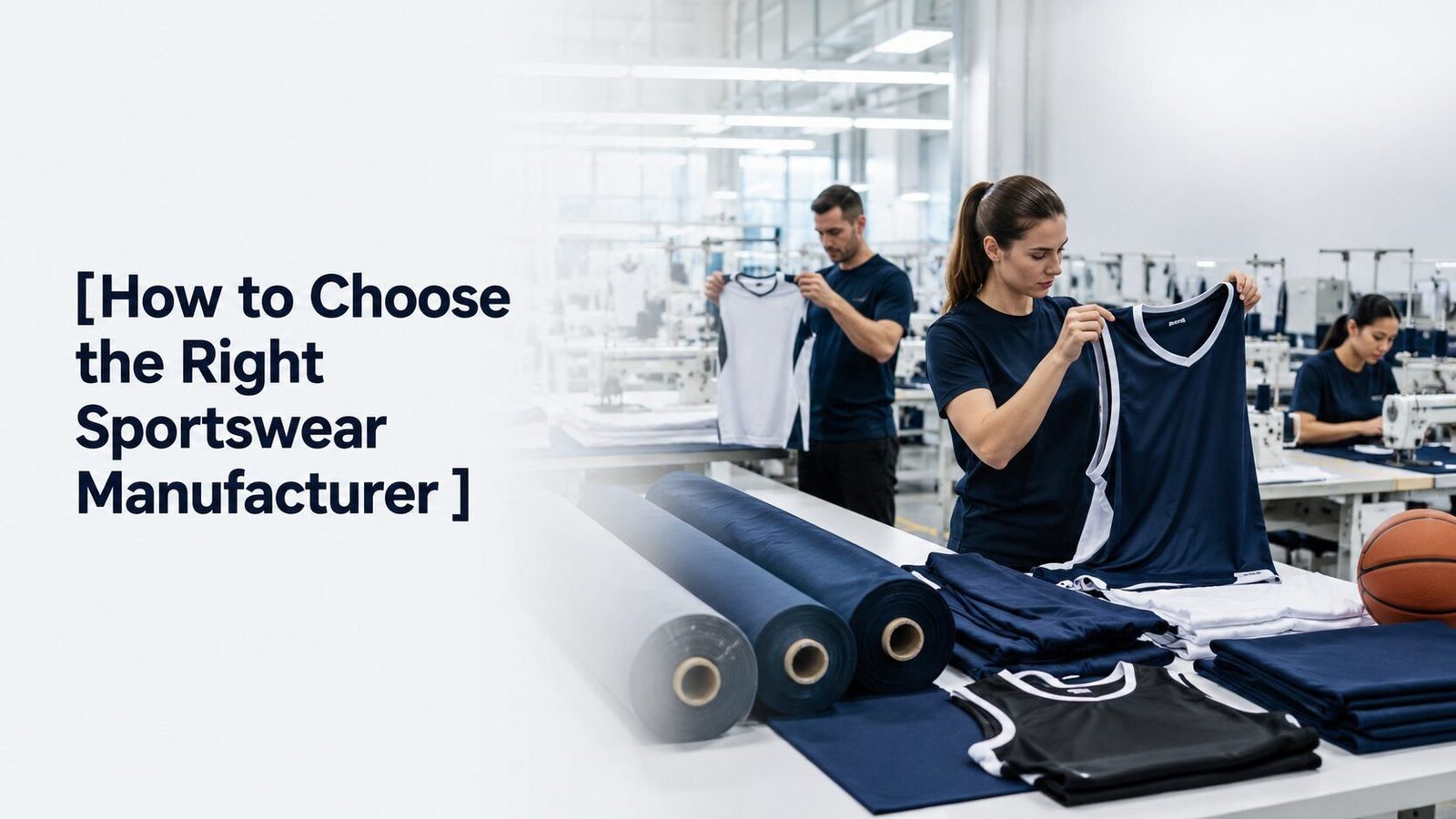
Whether you’re launching a new sportswear brand, ordering uniforms for a sports team, or sourcing apparel for a retail business, selecting the right sportswear manufacturer is one of the most important decisions you’ll make. The quality of your products, your customers’ satisfaction, and even your brand’s reputation depend heavily on the manufacturer you choose.
The global demand for custom sportswear continues to grow as sports clubs, educational institutions, fitness brands, and retailers look for apparel that combines performance, durability, comfort, and professional branding. With so many manufacturers available, finding the right partner can feel overwhelming.
Many buyers make the mistake of comparing suppliers based only on price. While cost is important, factors such as manufacturing expertise, material quality, production capacity, customization options, communication, and quality assurance have a much greater impact on the success of your project.
This comprehensive guide will help you understand exactly what to look for when evaluating a sportswear manufacturer. You’ll also discover common mistakes to avoid, practical buying tips, and the key questions to ask before placing your first order.
Why Choosing the Right Sportswear Manufacturer Matters
A sportswear manufacturer is more than just a supplier—they become an extension of your business. Every jersey, tracksuit, training kit, or custom uniform they produce represents your brand in the eyes of your customers.
A reliable manufacturing partner helps you maintain product consistency, meet delivery deadlines, and scale production as your business grows. On the other hand, working with an inexperienced or unreliable supplier can result in poor-quality garments, delayed shipments, inconsistent sizing, communication issues, and unnecessary financial losses.
Investing time in selecting the right manufacturer from the beginning can save significant time, money, and stress later.
Key Benefits of Choosing the Right Manufacturer
- Consistent product quality
- Reliable production schedules
- Access to high-performance materials
- Professional customization options
- Better customer satisfaction
- Long-term business growth
- Improved brand reputation
- Easier scalability as demand increases
Expert Insight: The best manufacturing partnerships are built on trust, transparency, and consistent quality, not simply on the lowest quotation.
1. Define Your Business Requirements Before Contacting Manufacturers
Before requesting quotations from different suppliers, clearly define your own project requirements. Manufacturers can provide better recommendations, more accurate pricing, and realistic production timelines when they understand exactly what you need.
Start by answering these questions:
- What type of sportswear are you ordering?
- Which sport or activity is the apparel designed for?
- What level of customization do you require?
- What quantities do you expect to order?
- What is your preferred delivery timeline?
- Which markets will you sell to?
- Do you require private label or OEM manufacturing?
- What is your estimated budget?
Having a detailed project brief also reduces misunderstandings during production.
Buyer Checklist
Before contacting any manufacturer, prepare:
- Product specifications
- Logo files
- Brand guidelines
- Color references
- Fabric preferences
- Size charts
- Quantity estimates
- Delivery deadline
- Shipping destination
- Customization requirements
The more information you provide, the smoother the manufacturing process becomes.
2. Evaluate the Manufacturer’s Industry Experience
Not every clothing manufacturer specializes in sportswear. Producing high-performance athletic apparel requires technical expertise, specialized equipment, and knowledge of sports-specific requirements.
An experienced sportswear manufacturer understands the importance of moisture management, stretchability, durability, fit, and performance fabrics. They can also recommend the most suitable production techniques based on your product type.
Look for manufacturers with experience producing:
- Basketball uniforms
- Soccer jerseys
- Cricket kits
- Rugby uniforms
- Volleyball apparel
- Baseball uniforms
- Activewear
- Training wear
- Compression garments
- Teamwear collections
Manufacturers with a diverse portfolio are generally better equipped to handle different customization requests and production challenges.
Questions to Ask
- How many years have you specialized in sportswear manufacturing?
- Which sports do you primarily manufacture for?
- Can you produce both small and bulk orders?
- Do you provide product samples?
- What customization methods do you offer?
- Can you manufacture for international clients?
Pro Tip
Ask to see recent product photos or sample work that matches the type of apparel you want to produce. A relevant portfolio often tells you more than a sales presentation.
3. Assess Product Quality and Craftsmanship
Quality should always be one of your highest priorities when choosing a sportswear manufacturer. Even the most attractive design can disappoint customers if the garment is poorly constructed or made from low-quality materials.
Evaluate the overall craftsmanship by looking at:
- Stitching consistency
- Seam strength
- Fabric quality
- Print durability
- Color accuracy
- Size consistency
- Finishing details
- Overall garment construction
If possible, request a production sample before placing a bulk order. A physical sample allows you to inspect the product closely and identify any issues before full-scale manufacturing begins.
Signs of High-Quality Sportswear
| Quality Factor | What to Look For |
| Stitching | Clean, even, and durable seams |
| Fabric | Soft, breathable, and suitable for the intended sport |
| Printing | Sharp graphics with long-lasting color retention |
| Fit | Consistent sizing across all garments |
| Finishing | Neat hems, labels, and overall presentation |
Key Takeaway: Never judge a manufacturer solely by product photos. Whenever possible, evaluate real samples to verify quality, fit, and finishing before committing to production.
4. Understand Fabric Options and Performance Materials
The performance of sportswear depends heavily on the fabric used. Different sports require different material properties, and choosing the wrong fabric can affect comfort, durability, and athletic performance.
When evaluating a sportswear manufacturer, ask about the fabrics they offer and whether they can recommend the best option for your specific application.
Common Sportswear Fabrics
| Fabric | Best For | Benefits |
| Polyester | Team uniforms, jerseys | Lightweight, durable, moisture-wicking |
| Mesh Polyester | Basketball, soccer | Breathable and improves airflow |
| Spandex Blend | Compression wear | Flexible and stretchable |
| Cotton Blend | Casual sportswear | Comfortable for everyday wear |
| Interlock Fabric | Training apparel | Soft, durable, smooth finish |
Questions to Ask
- Which fabrics do you recommend for my sport?
- Are the fabrics moisture-wicking?
- Are they colorfast after repeated washing?
- Can I request fabric samples before production?
Expert Tip: Ask for fabric swatches before approving production. Feeling the material in person helps you assess quality far better than viewing photos alone.
5. Evaluate Customization and Branding Capabilities
A reliable sportswear manufacturer should offer multiple customization options to help your team or brand stand out.
Depending on your requirements, customization may include:
- Team names
- Player names
- Numbers
- Sponsor logos
- Club badges
- Brand labels
- Neck labels
- Hang tags
- Custom packaging
Common Printing Methods
| Method | Best Use | Advantages |
| Sublimation | Team uniforms | Vibrant colors, long-lasting, no peeling |
| Screen Printing | Simple designs | Cost-effective for bulk orders |
| Heat Transfer | Small runs | Good for names and numbers |
| Embroidery | Logos | Premium appearance and durability |
A manufacturer that offers several decoration techniques can recommend the most suitable option for your design and budget.
6. Review Manufacturing Capacity and Minimum Order Quantity (MOQ)
Production capacity is an important factor, especially if you plan to grow your business.
Some manufacturers focus on large wholesale orders, while others also accommodate startups and smaller brands.
Before placing an order, clarify:
- Minimum order quantity (MOQ)
- Maximum monthly production capacity
- Ability to scale as demand increases
- Sample order availability
Choosing a manufacturer whose capacity matches your business size ensures smoother operations as your orders grow.
7. Understand Production Timelines and Delivery
Timely delivery is just as important as product quality.
Ask manufacturers about every stage of the production process, including:
- Sample development
- Sample approval
- Bulk production
- Quality inspection
- Packaging
- Shipping
A transparent production schedule helps you plan inventory, product launches, and customer deliveries more effectively.
Typical Production Workflow
- Initial inquiry
- Design discussion
- Quotation
- Sample production
- Sample approval
- Bulk manufacturing
- Quality inspection
- Packaging
- Shipping
Key Takeaway: Clear production timelines reduce delays and improve communication throughout the project.
8. Check Quality Control Standards
Quality control should never be overlooked.
Ask manufacturers how they inspect products before shipment.
A professional quality control process may include:
- Fabric inspection
- Print inspection
- Stitching inspection
- Size verification
- Final garment inspection
- Packaging inspection
Manufacturers with documented quality procedures are generally more reliable than those without a structured inspection process.
9. Evaluate Communication and Customer Support
Strong communication often separates excellent manufacturers from average ones.
Choose a supplier that:
- Responds promptly.
- Provides regular production updates.
- Explains processes clearly.
- Answers technical questions confidently.
- Resolves problems professionally.
Poor communication can lead to production delays, misunderstandings, and costly errors.
10. Compare Pricing Based on Overall Value
Many buyers focus only on price, but the cheapest quotation is not always the best value.
Instead, evaluate:
- Product quality
- Fabric quality
- Printing quality
- Customer support
- Production reliability
- Delivery timelines
- Long-term partnership potential
Value Comparison
| Lowest Price | Best Value |
| Lower quality | Better quality |
| Limited support | Professional communication |
| Higher risk | Reliable production |
| Hidden costs | Transparent pricing |
Common Mistakes Buyers Should Avoid
Avoid these common mistakes when selecting a sportswear manufacturer:
- Choosing solely based on price.
- Skipping sample approval.
- Ignoring product quality.
- Not discussing delivery timelines.
- Failing to clarify MOQ.
- Overlooking communication quality.
- Forgetting to ask about after-sales support.
Learning from these mistakes can save significant time and money.
Sportswear Manufacturer Evaluation Checklist
Before making your final decision, ensure your manufacturer can confidently answer “yes” to the following:
✅ Experienced in sportswear manufacturing
✅ Offers high-quality performance fabrics
✅ Provides customization options
✅ Shares product samples
✅ Has clear production timelines
✅ Maintains quality control procedures
✅ Communicates professionally
✅ Can scale production as your business grows
✅ Offers transparent pricing
✅ Understands your project requirements
Frequently Asked Questions
How do I choose the best sportswear manufacturer?
Evaluate their experience, product quality, customization capabilities, communication, production capacity, and quality control instead of comparing suppliers based only on price.
What questions should I ask before placing an order?
Ask about MOQ, lead times, sample availability, fabric options, printing methods, quality control, production capacity, and shipping timelines.
Why is product sampling important?
Samples allow you to verify garment quality, sizing, colors, stitching, and printing before committing to bulk production.
Which printing method is best for sports uniforms?
Sublimation is generally preferred for team sports because it produces vibrant, durable designs that won’t crack or peel under normal use.
What is MOQ?
MOQ stands for Minimum Order Quantity—the smallest number of units a manufacturer requires for production.
How long does custom sportswear manufacturing take?
Production timelines vary depending on order size, customization, and shipping destination. Always confirm estimated lead times before placing an order.
Can startups work with sportswear manufacturers?
Yes. Many manufacturers offer flexible MOQs or sample programs suitable for startups and small businesses.
Why is communication important during production?
Regular communication helps prevent misunderstandings, keeps projects on schedule, and ensures expectations are aligned throughout the manufacturing process.
Conclusion
Choosing the right sportswear manufacturer is a decision that can influence your product quality, customer satisfaction, and long-term business growth. While price is an important consideration, it should never be the only factor in your decision-making process.
By evaluating manufacturing experience, material quality, customization options, production capacity, quality control, communication, and overall value, you can confidently select a partner that aligns with your business objectives.
A reliable manufacturer is more than a supplier—they become a strategic partner who supports your growth through consistent quality, dependable service, and professional expertise.