Stedge Sports is a manufacturer of custom sportswear and apparel.

Best Fabrics for Youth Sports Uniforms (Breathable & Durable Guide)


Ask any coach who’s dealt with a ripped jersey mid-season, a uniform that’s still soaked at halftime, or a shirt that’s faded and shrunk after ten washes, and they’ll tell you the same thing: the fabric matters just as much as the design. For youth teams especially, uniforms get pushed harder than almost any other piece of clothing a kid owns, sweat, grass stains, weekly washing, and constant movement, all on a growing body that needs to stay comfortable through every practice and game.
At Stedge Sports, fabric selection is one of the first conversations we have with coaches and team managers before a single design decision gets made. Here’s what actually matters when you’re choosing material for youth sports uniforms, and why some popular options aren’t as good as they look on paper.
Why Fabric Choice Matters More for Youth Uniforms
Kids’ sports uniforms deal with a tougher combination of demands than most adult activewear:
- Constant movement running, jumping, and quick direction changes all season long
- Heavy sweat output relative to body size, especially in hot weather
- Frequent washing since youth uniforms get worn for practice and games alike
- Rough handling youth players are not gentle on their gear
- Growing bodies, meaning the fabric needs to move with them, not restrict them
A fabric that looks fine on a hanger can fail on all five of these within a single season. Understanding how different performance fabrics are manufactured also helps coaches choose uniforms that deliver better durability throughout the season. That’s why the right material choice saves money on replacements just as much as it improves comfort and performance.
The Core Fabric Types Used in Youth Sports Uniforms
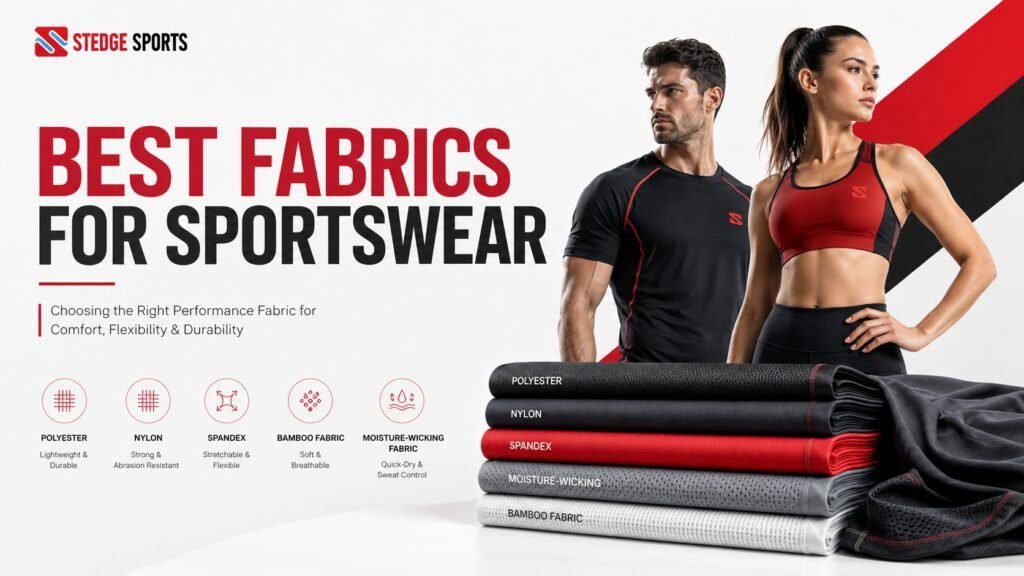
Polyester is the workhorse of youth sports uniforms, and for good reason. It wicks moisture away from the skin efficiently, dries fast, resists shrinking and fading through repeated washes, and holds its shape season after season. It’s also lightweight, which matters for young athletes who need to move freely without feeling weighed down.
Polyester mesh / birdseye mesh takes that same base fabric and knits it into an open structure for maximum airflow. This is what you’ll usually find in underarm panels, side panels, and back panels of high-intensity uniforms, the open weave lets air move directly against the skin, which keeps body temperature down even during the most demanding stretches of a game.
Nylon brings strong abrasion resistance and holds up especially well in wet or rugged conditions, which is why it shows up often in goalkeeper kits and outdoor gear that takes a beating from turf, grass, and rain.
Spandex (elastane) blends aren’t used alone, they’re blended into polyester or nylon at anywhere from 5-15% to add stretch and shape recovery. This is what lets a uniform stretch through a full range of motion and bounce back to its original shape instead of sagging or losing its fit over the season.
Polypropylene is less common but valuable for cold-weather sports. It’s water-resistant, breathable, and has natural thermal properties that keep athletes warm without overheating, a useful option for early morning or late season games in cooler climates.
Cotton and natural wool, despite feeling soft and comfortable, are generally a poor choice for performance uniforms. They absorb sweat instead of wicking it away, take longer to dry, and are prone to shrinking, staining, and fading faster than synthetic performance fabrics. Cotton blends still have a place in casual/spirit wear, just not on the field.
What Actually Makes a Fabric “Breathable”
Breathable doesn’t just mean thin or lightweight, it comes down to how the fabric is knitted and how it manages moisture. A true moisture-wicking fabric pulls sweat away from the skin through the fibers and spreads it across the outer surface, where it evaporates quickly. Mesh panels add a second layer of benefit on top of that by physically allowing more air to pass through the fabric structure itself. A uniform can be lightweight and still trap heat if it isn’t built with the right knit, which is why “breathable” claims are worth checking against the actual fabric type, not just the weight.
Matching Fabric to the Sport
Different sports put different demands on uniform fabric, and the right choice changes accordingly:
- Basketball needs lightweight, highly breathable fabric with strong moisture-wicking, since the sport is constant, high intensity movement in an indoor environment. See our basketball uniforms for sublimated, mesh panel designs built around this.
- American football needs heavier, more durable mesh that can handle contact, padding, and repeated physical stress without tearing. Browse our football uniforms for contact ready fabric options.
- Soccer benefits from polyester mesh with ventilation zones at the back, underarms, and sides, since players are constantly running across a full 90 minute match. Check our soccer uniforms for breathable, lightweight builds.
- Baseball and softball typically use a smoother, tighter knit polyester that holds a traditional look while still wicking moisture durability matters here given how often uniforms slide and dive into dirt. See our baseball uniforms.
- Ice hockey and other cold-weather sports do well with polypropylene or thermal blend fabrics that manage moisture while adding warmth. Explore our ice hockey uniforms.
- Cheerleading relies on four-way stretch spandex polyester blends to handle stunts and tumbling, we cover this in detail in our guide to designing a custom cheerleading uniform, alongside our cheerleading uniforms collection.
- Compression and active wear uses spandex heavy blends for maximum stretch and recovery, browse our active wear range for these.
GSM Explained: Why Fabric Weight Matters
Fabric weight is measured in GSM (grams per square meter), and it directly affects how a uniform performs. Youth sports uniforms typically fall somewhere in the 140-280 GSM range. Lighter GSM fabric (toward the lower end) suits high-intensity, hot weather sports where breathability matters most. Heavier GSM fabric (toward the higher end) adds durability and structure, which matters more for contact sports or teams that need uniforms to survive a long, rough season. Neither end is “better” on its own, it depends on the sport and climate the uniform is built for.
Extra Fabric Treatments Worth Asking About
Beyond the base fabric type, a few finishing treatments make a real difference over a season:
- Anti-microbial / odor-resistant treatments genuinely useful for uniforms that get worn hard and washed often
- Tight, snag-resistant weaves (like interlock knits) reduce the chance of pulls and tears during play
- Colorfastness treatments keep team colors from fading after repeated washing and sun exposure
None of these replace choosing the right base fabric, but they’re worth asking your uniform manufacturer about if durability across a full season is a priority.
Fabric and Printing Method Go Hand in Hand
Fabric choice isn’t just about comfort and durability, it also determines what printing method will actually work on the uniform. Sublimation printing, which produces the bold, all over color designs most youth uniforms use today, only bonds properly with polyester and poly blend fabrics. If your team is planning a full color, edge-to-edge design, the fabric needs to be sublimation compatible from the start. We break this down fully in our sublimation vs screen printing guide, which is worth reading alongside this one before finalizing your uniform order.
Quick Fabric Comparison
| Fabric | Breathability | Durability | Stretch | Best For |
|---|---|---|---|---|
| Polyester | High | High | Low–Moderate | All-around uniform base fabric |
| Polyester/Birdseye Mesh | Very High | Moderate–High | Low | Soccer, basketball, high-intensity sports |
| Nylon | Moderate | Very High | Low | Wet/rugged conditions, goalkeeper gear |
| Spandex Blends (5–15%) | Moderate | High | Very High | Cheer, compression wear, active wear |
| Polypropylene | High | Moderate | Low | Cold-weather sports |
| Cotton | Low | Low | Low | Casual/spirit wear only, not performance uniforms |
Common Mistakes Coaches and Parents Make
- Choosing cotton for “comfort” without realizing it holds sweat and slows drying time during actual play
- Ignoring the climate the team plays in a hot weather team in heavy, low-breathability fabric will overheat, and a cold weather team in ultra light mesh will freeze
- Overlooking GSM entirely and judging fabric only by how it looks or feels off the field
- Assuming all polyester is equal mesh construction, weave tightness, and blend ratio all change how a “polyester uniform” actually performs
FAQs
What is the best fabric for youth sports uniforms overall? Polyester, and specifically polyester mesh blends, is the standard choice across almost every youth sport, since it wicks moisture, dries quickly, resists shrinking and fading, and holds up to frequent washing.
Is polyester better than cotton for sports uniforms? Yes, for performance uniforms. Polyester wicks sweat away from the skin and dries quickly, while cotton absorbs moisture and stays wet, which affects both comfort and performance during play. Cotton still works fine for casual team spirit wear off the field.
What fabric is best for hot climates? Lightweight polyester mesh or birdseye mesh with strong moisture-wicking properties and a lower GSM works best in hot, humid conditions, since it maximizes airflow and sweat evaporation.
Why do some jerseys have mesh panels instead of being mesh all over? Mesh panels are usually placed strategically at the back, underarms, and sides — the areas that generate the most heat and sweat, while the rest of the uniform uses a slightly heavier fabric for durability and a cleaner surface for graphics.
Does fabric choice affect how long a uniform lasts? Significantly. A well-chosen, higher quality polyester or nylon blend can outlast a cheaper, thinner fabric by multiple seasons, especially with proper care and washing.
What fabric works best with sublimation printing? Polyester and high polyester blend fabrics are required for sublimation printing, since the dye needs to bond directly with polyester fibers under heat. Sublimation won’t transfer properly onto cotton or low-polyester blends.
Related Articles
Continue exploring sportswear fabrics, printing methods, and manufacturing with these guides:
- Best Fabrics for Sportswear
- Sublimation vs Screen Printing for Sportswear
- Complete Guide to Custom Sportswear Manufacturing
Choosing the Right Fabric Makes Every Season Better
The right fabric does far more than improve comfort, it directly affects durability, breathability, moisture management, and overall athletic performance. By selecting materials that match your sport, climate, and level of play, teams can reduce replacement costs while ensuring every athlete stays comfortable throughout the season. Investing in quality performance fabrics from the beginning helps create uniforms that perform consistently on and off the field.
At Stedge Sports, we help schools, clubs, academies, and sports organizations choose the most suitable fabrics for custom uniforms based on their sport, playing conditions, and performance requirements. Whether you’re outfitting a youth team or planning a complete uniform program, visit our homepage to explore our custom sportswear manufacturing solutions and discover how we can support your next project.