 Stedge Sports is a manufacturer of custom sportswear and apparel.

Best Fabrics for Sportswear: A Complete Guide to Choosing High-Performance Materials

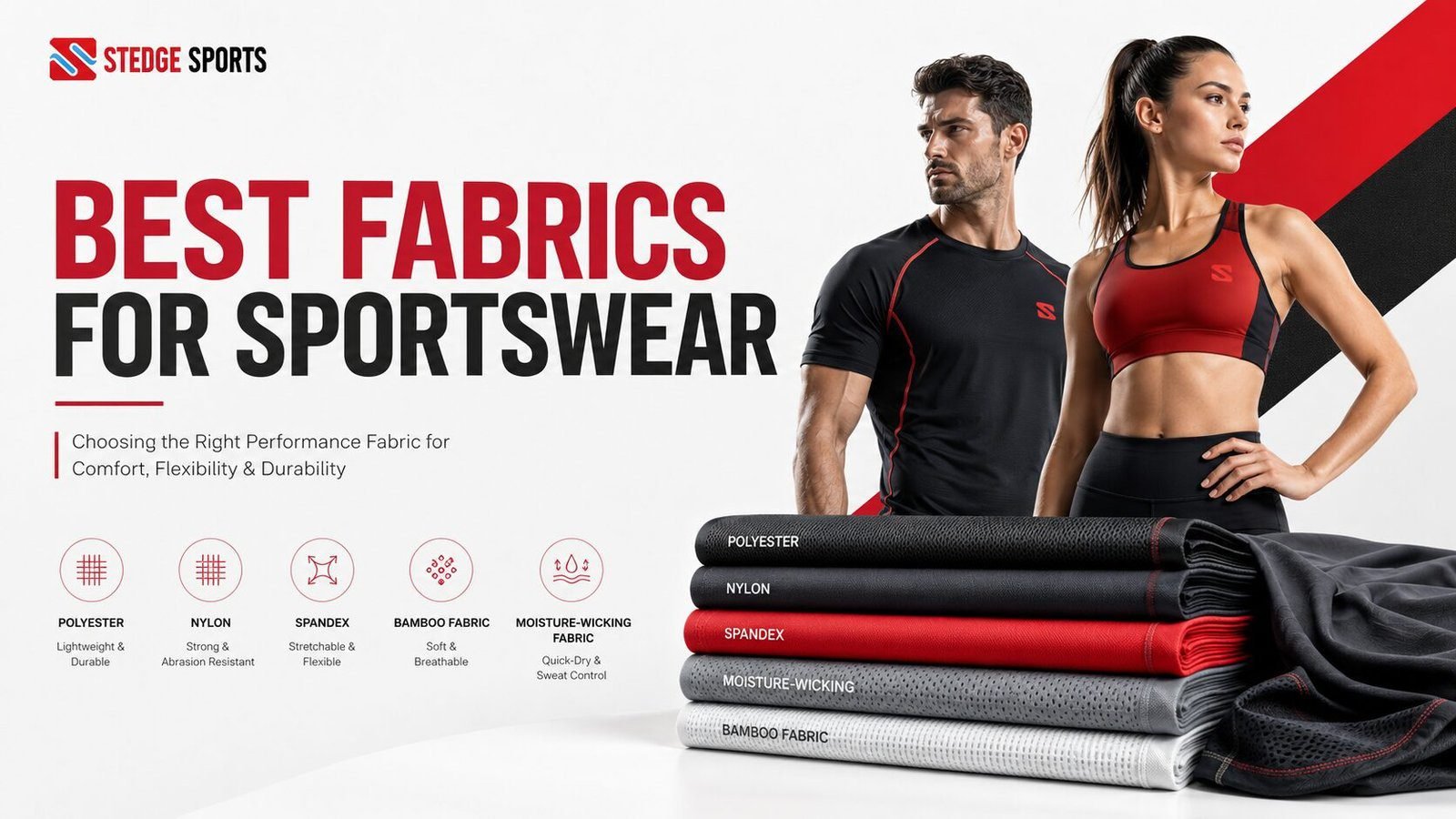
The performance of any sportswear product begins with the fabric. While design and customization help define a brand, the material itself determines how comfortable, durable, and functional the finished garment will be.
Whether you are developing apparel for sports teams, schools, fitness businesses, retailers, or launching your own sportswear brand in the USA, selecting the right fabric is one of the most important decisions during product development.
Modern athletes expect clothing that supports movement, regulates body temperature, manages moisture, and maintains its appearance after repeated use. These expectations have increased the demand for advanced performance textiles that combine durability with comfort.
Understanding the strengths of different sportswear fabrics helps businesses choose materials that align with both customer expectations and the intended use of the garment. Making informed decisions during the planning stage also reduces production issues and improves long-term customer satisfaction.
This guide explores the most commonly used sportswear fabrics, their advantages, and practical tips for selecting the best material for your next sportswear project.
What is the best fabric for sportswear?
Polyester is widely regarded as one of the best fabrics for sportswear because it is lightweight, durable, moisture-wicking, and ideal for custom printing. Depending on the application, mesh, spandex, nylon, and blended fabrics can also improve breathability, flexibility, and comfort for different sports and activities.
Why Fabric Selection Matters
Fabric influences every aspect of sportswear performance. It affects comfort, flexibility, durability, breathability, appearance, and the overall user experience.
A well-designed garment made from poor-quality material will rarely satisfy athletes or customers. On the other hand, selecting the right fabric improves performance while helping apparel maintain its shape, color, and functionality over time.
For businesses serving customers in the USA, quality materials also contribute to stronger customer satisfaction and increased confidence in your products.
Benefits of Choosing the Right Fabric
- Improved athlete comfort
- Better moisture management
- Enhanced airflow
- Longer garment lifespan
- Better color retention
- Improved print quality
- Greater flexibility
- Higher customer satisfaction
Expert Insight: Fabric quality is often one of the first things customers notice. Investing in performance materials helps create apparel that delivers consistent results while strengthening your brand’s reputation.
Key Characteristics of High-Performance Sportswear Fabrics
Performance fabrics are engineered to help athletes stay comfortable while supporting movement during training and competition.
When comparing materials, consider the following characteristics:
Moisture Management
Sportswear should move perspiration away from the skin, helping athletes remain dry and comfortable throughout physical activity.
Breathability
Good airflow allows excess heat to escape, reducing discomfort during intense exercise or outdoor competition.
Flexibility
Stretchable materials support unrestricted movement while maintaining their original shape after repeated use.
Durability
Sportswear should withstand regular washing, stretching, and demanding athletic activities without losing quality.
Lightweight Construction
Lighter fabrics help reduce unnecessary weight while improving overall comfort during training and competition.
Polyester – The Industry Standard for Sportswear
Polyester remains the most widely used fabric in sportswear manufacturing because it offers an excellent balance of durability, affordability, moisture management, and print compatibility.
It is commonly used for:
- Soccer jerseys
- Basketball uniforms
- Cricket kits
- Baseball apparel
- Volleyball uniforms
- Training shirts
- Running apparel
- Team uniforms
Its moisture-wicking properties help athletes remain comfortable, while its durability makes it suitable for repeated washing and long-term use.
Polyester is also the preferred material for sublimation printing because it produces vibrant, long-lasting graphics that become part of the fabric instead of sitting on the surface.
Advantages of Polyester
- Lightweight
- Quick drying
- Excellent durability
- Moisture-wicking
- Wrinkle resistant
- Cost-effective
- Excellent print compatibility
- Suitable for multiple sports
Mesh Fabric for Maximum Breathability
Mesh fabric is widely used in sportswear because it improves airflow and helps regulate body temperature during physical activity. Its open-weave construction allows heat and moisture to escape more efficiently, making it an excellent choice for athletes training in warm environments or participating in high-intensity sports.
Many manufacturers combine mesh panels with polyester garments to increase ventilation without compromising durability.
Common Applications
- Basketball uniforms
- Soccer jerseys
- Running apparel
- Cycling jerseys
- Training shirts
- Warm-up jackets
Advantages of Mesh Fabric
- Excellent airflow
- Lightweight construction
- Faster drying
- Improved comfort
- Helps reduce heat buildup
Expert Tip: Mesh fabric performs best when strategically placed in high-heat areas such as the back, underarms, or side panels rather than being used throughout the entire garment.
Spandex for Flexibility and Freedom of Movement
Sports that require stretching, agility, or explosive movement often benefit from fabrics containing spandex. Known for its exceptional elasticity, spandex allows garments to move naturally with the body while maintaining their original shape.
Instead of being used alone, spandex is typically blended with polyester or nylon to enhance flexibility without sacrificing durability.
Spandex is commonly used in:
- Compression apparel
- Training tights
- Fitness clothing
- Cycling shorts
- Base layers
- Performance leggings
Benefits of Spandex
- Four-way stretch
- Comfortable fit
- Excellent shape retention
- Increased mobility
- Reduced fabric restriction
Choosing the correct percentage of spandex depends on the intended activity and desired level of compression.
Nylon for Strength and Long-Term Durability
Nylon is valued for its strength, abrasion resistance, and smooth texture. It performs particularly well in sportswear that experiences frequent movement, friction, or outdoor use.
Compared with many traditional fabrics, nylon offers excellent durability while remaining lightweight.
Common uses include:
- Outdoor sports apparel
- Training jackets
- Athletic shorts
- Windbreakers
- Performance outerwear
Advantages of Nylon
- High durability
- Abrasion resistance
- Lightweight feel
- Smooth finish
- Long product lifespan
For businesses serving customers in the USA, nylon can be an excellent option for products intended for outdoor training or changing weather conditions.
Fabric Blends Offer Balanced Performance
Modern sportswear often combines multiple fibers to achieve a balance of comfort, durability, flexibility, and moisture management.
Blended fabrics allow manufacturers to improve overall garment performance while meeting the needs of different sports and activities.
Some common combinations include:
| Fabric Blend | Typical Application | Key Benefits |
| Polyester + Spandex | Compression apparel | Stretch and moisture management |
| Polyester + Mesh | Team uniforms | Breathability and durability |
| Nylon + Spandex | Activewear | Flexibility and strength |
| Cotton + Polyester | Lifestyle sportswear | Soft feel with improved durability |
Each blend is selected based on how the garment will be used rather than relying on a single fabric for every application.
How to Choose the Right Fabric for Your Sportswear
Selecting the right material depends on several factors, including the sport, climate, customization requirements, and customer expectations.
Before making a final decision, evaluate the following:
Intended Sport
Different activities place different demands on apparel. High-contact sports require durable fabrics, while endurance sports often prioritize breathability and moisture management.
Climate
Products designed for warmer regions should emphasize lightweight, breathable materials. Cooler environments may require fabrics that provide additional insulation without limiting movement.
Customization Method
Printing and branding techniques perform differently depending on the material. Selecting a fabric that supports your preferred customization process helps improve the final appearance and durability of the finished garment.
Comfort
Athletes expect sportswear that feels comfortable throughout training and competition. Softness, flexibility, and weight all contribute to the overall wearing experience.
Durability
Repeated washing and regular athletic use should not significantly reduce the garment’s performance or appearance.
Common Fabric Selection Mistakes
Choosing the wrong material can affect product quality, customer satisfaction, and long-term business growth.
Avoid these common mistakes:
- Selecting fabric based only on cost.
- Ignoring the intended use of the garment.
- Choosing materials that trap heat.
- Overlooking stretch requirements.
- Failing to test fabric samples.
- Using low-quality materials for high-performance apparel.
- Not considering printing compatibility.
Evaluating fabric performance before production helps reduce costly revisions and improves the final product.
Sportswear Fabric Comparison
| Fabric | Breathability | Stretch | Durability | Best Applications |
| Polyester | Excellent | Moderate | High | Team uniforms, jerseys |
| Mesh Polyester | Outstanding | Moderate | High | High-intensity sports |
| Spandex Blend | Good | Excellent | High | Compression wear |
| Nylon | Good | Moderate | Excellent | Outdoor apparel |
| Polyester Blend | Very Good | Good | High | Multi-purpose sportswear |
Key Takeaway
The best sportswear fabric is the one that matches the specific performance requirements of the athlete and the intended use of the garment. Understanding the strengths of each material allows businesses to create products that offer better comfort, durability, and long-term value while meeting customer expectations.
Frequently Asked Questions
What is the best fabric for sportswear?
Polyester is one of the most widely used sportswear fabrics because it offers an excellent combination of durability, moisture management, lightweight comfort, and compatibility with modern customization methods. Depending on the intended use, mesh, spandex, nylon, and blended fabrics can also provide additional performance benefits.
Which fabric is best for custom team uniforms?
Polyester is commonly preferred for custom team uniforms because it is durable, easy to maintain, and supports vibrant full-color designs through sublimation printing.
Why is moisture-wicking fabric important?
Moisture-wicking materials move perspiration away from the skin, helping athletes stay dry and comfortable during training and competition while reducing discomfort caused by excess moisture.
Is cotton suitable for sportswear?
Cotton offers softness and everyday comfort, but it absorbs moisture and dries more slowly than performance fabrics. It is generally more suitable for casual athletic clothing than high-performance sports apparel.
What is the advantage of blended sportswear fabrics?
Blended fabrics combine the strengths of different fibers to improve flexibility, durability, breathability, and comfort. The right blend depends on the intended activity and performance requirements.
How do I choose the right fabric for my sportswear collection?
Start by considering the intended sport, climate, required flexibility, durability, customization method, and customer expectations. Testing fabric samples before production also helps ensure the material performs as expected.
Which fabric is best for compression apparel?
Compression garments typically use polyester blended with spandex because this combination provides excellent stretch, support, and recovery while maintaining comfort during movement.
Why should businesses request fabric samples before production?
Fabric samples allow you to evaluate texture, weight, flexibility, color, and overall quality before manufacturing begins. Reviewing samples helps reduce production errors and ensures the selected material meets your product requirements.
Why Choose Stedge Sports for High-Quality Sportswear Manufacturing?
Choosing the right fabric is one of the most important decisions in sportswear manufacturing. From moisture management and flexibility to durability and print performance, every material contributes to the overall quality of the finished garment. Understanding how different fabrics perform allows businesses to make informed decisions that support customer satisfaction and long-term brand growth.
Stedge Sports works with businesses, sports teams, schools, retailers, and entrepreneurs to manufacture custom sportswear using carefully selected performance materials and professional production processes. To explore available products, manufacturing capabilities, and customization options, visit the Home Page and learn how your next sportswear project can move from concept to production.