Stedge Sports is a manufacturer of custom sportswear and apparel.

How to Start a Sportswear Brand: A Complete Step-by-Step Guide for Entrepreneurs

How do you start a sportswear brand?
To start a sportswear brand, define your target audience, research the market, create a business plan, develop your product collection, choose a reliable manufacturing partner, approve production samples, build a professional website, and implement a marketing strategy. Focusing on quality and customer needs helps create a strong foundation for long-term business growth.
How to Start a Sportswear Brand: A Complete Step-by-Step Guide for Entrepreneurs
The global demand for sportswear continues to grow as consumers prioritize active lifestyles, fitness, and high-performance apparel. This creates exciting opportunities for entrepreneurs who want to build a successful sportswear business. Whether your goal is to supply schools, sports teams, fitness brands, retailers, or online customers in the USA, careful planning is essential before launching your first collection.
Starting a sportswear brand involves much more than creating attractive designs. Every decision—from selecting performance fabrics and developing products to choosing a manufacturing partner and building your marketing strategy—plays an important role in the success of your business.
Many startups focus only on logos and branding while overlooking critical areas such as product quality, manufacturing processes, and customer expectations. Building a strong foundation from the beginning helps reduce costly mistakes and positions your business for sustainable growth.
This guide walks you through the essential steps involved in launching a sportswear brand while highlighting practical considerations that support long-term success.
Why Start a Sportswear Brand?
The sportswear industry continues to expand as participation in sports, fitness activities, and recreational exercise increases worldwide. Businesses that offer quality apparel and understand customer needs can build lasting relationships while serving a growing market.
Entrepreneurs often enter this industry because it offers opportunities to create products for different customer segments, including:
- Sports teams
- Schools and colleges
- Fitness centers
- Athletic clubs
- Retail businesses
- E-commerce stores
- Corporate wellness programs
For businesses targeting customers in the USA, offering durable products, reliable service, and consistent branding can help establish credibility in a competitive marketplace.
Benefits of Starting a Sportswear Brand
- Growing consumer demand
- Opportunities for product customization
- Strong branding potential
- Scalable business model
- Diverse customer segments
- Long-term business growth opportunities
Expert Insight: Successful sportswear brands are built on product quality, consistency, and customer trust rather than simply following market trends.
Understand Your Target Market
Before developing products, identify who your customers are and what they expect from your brand.
Understanding your audience allows you to create apparel that solves specific needs instead of trying to appeal to everyone.
Consider factors such as:
- Age group
- Preferred sports
- Training level
- Purchasing behavior
- Budget expectations
- Performance requirements
You should also study competitors to identify opportunities where your products can offer additional value or address unmet customer needs.
Market Research Checklist
Before launching your brand, research:
- Industry trends
- Customer preferences
- Pricing expectations
- Popular product categories
- Seasonal demand
- Competitor positioning
Collecting this information early helps guide product development and marketing decisions.
Create a Business Plan
A clear business plan provides direction and helps you make informed decisions as your brand grows.
Your plan should define:
- Business goals
- Target audience
- Product categories
- Manufacturing approach
- Marketing strategy
- Sales channels
- Financial projections
- Growth objectives
Rather than creating an overly complex document, focus on building a practical roadmap that can evolve as your business expands.
Business Planning Essentials
Include:
- Brand vision
- Mission statement
- Revenue goals
- Startup budget
- Production timeline
- Launch strategy
- Customer acquisition plan
A well-structured business plan improves decision-making while preparing your business for future growth.
Key Takeaway
Starting a sportswear brand begins with careful planning. Understanding your market, defining clear business objectives, and building a practical roadmap provide the foundation needed to develop quality products and establish a successful brand.
Build a Strong Brand Identity
A successful sportswear brand is recognized for more than its products. A clear brand identity helps customers understand who you are, what you represent, and why they should choose your products over competitors.
Your brand identity should remain consistent across your website, product labels, packaging, catalogs, and marketing materials.
Key elements include:
- Business name
- Professional logo
- Brand colors
- Typography
- Brand voice
- Mission statement
- Unique Selling Proposition (USP)
A well-defined identity builds trust and makes your business more memorable to customers in the USA and other target markets.
Brand Development Checklist
Before launching, make sure you have:
- A memorable brand name
- A professional logo
- Consistent brand colors
- Brand guidelines
- Product labels
- Hang tags
- Packaging concepts
- Marketing assets
A consistent identity strengthens brand recognition and supports long-term customer loyalty.
Design Your First Sportswear Collection
Your first collection introduces customers to your brand, so quality and focus are more important than offering a large number of products.
Instead of launching with an extensive catalog, begin with a carefully selected product range that reflects your brand’s goals and meets the needs of your target audience.
Many new sportswear businesses start with:
- Team jerseys
- Training shirts
- Shorts
- Hoodies
- Tracksuits
- Compression apparel
- Warm-up jackets
- Sports uniforms
Developing a focused collection allows you to simplify production while maintaining consistent quality.
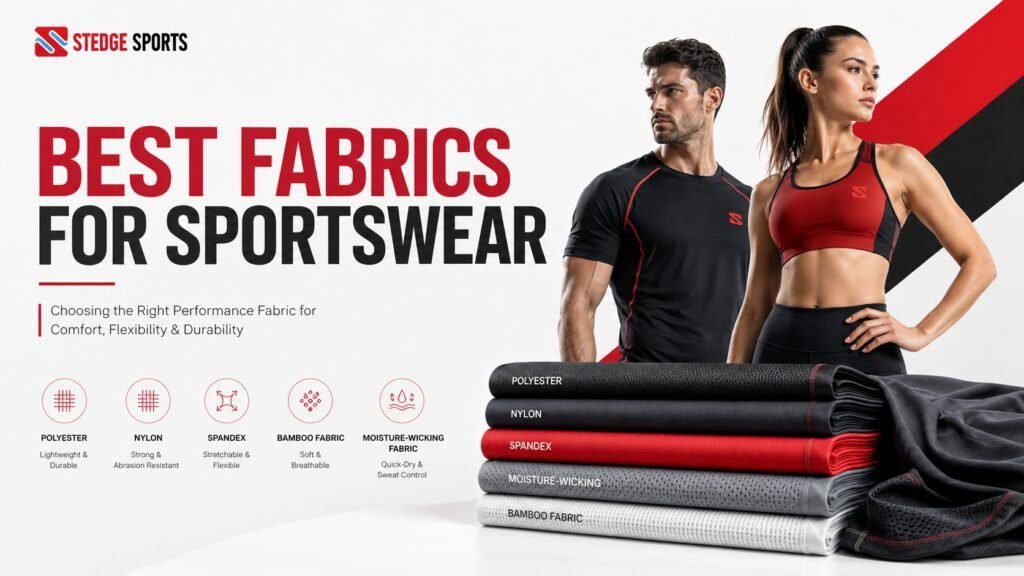
Choosing the right performance materials is equally important during product development. Our guide to the best fabrics for sportswear explains how different fabrics affect comfort, durability, and overall garment performance.
Product Planning Considerations
Before finalizing your collection, consider:
- Intended sport
- Fabric selection
- Color combinations
- Size range
- Customization requirements
- Printing techniques
- Seasonal demand
- Customer preferences
A well-planned collection creates a stronger first impression and provides a solid foundation for future product expansion.
Choose the Right Manufacturing Model
Selecting the appropriate manufacturing model is one of the most important business decisions you’ll make.
The two most common options are OEM (Original Equipment Manufacturer) and Private Label Manufacturing.
OEM Manufacturing
OEM manufacturing allows businesses to create products using their own specifications, designs, and branding.
If you’re comparing OEM and ODM manufacturing models, our guide to OEM vs ODM sportswear manufacturing explains the advantages of each approach for growing sportswear brands.
This model is ideal for businesses that want:
- Complete design flexibility
- Exclusive products
- Custom sizing
- Specialized fabrics
- Unique branding
Private Label Manufacturing
Private label manufacturing allows businesses to apply their own branding to existing product designs.
This approach is often suitable for startups because it simplifies product development while reducing time to market.
Choosing the right model depends on your budget, customization requirements, and long-term business objectives.
Select a Reliable Manufacturing Partner
The quality of your manufacturing partner directly influences the quality of your finished products.
If you’re evaluating potential suppliers, our guide on how to choose the right sportswear manufacturer explains the key factors buyers should consider before making a decision.
Rather than focusing only on price, evaluate manufacturers based on their experience, production capabilities, communication, and quality standards.
A reliable manufacturing partner should offer:
- Experience in sportswear production
- Performance fabric options
- Product customization
- Sample development
- Quality control procedures
- Clear production schedules
- Professional communication
- Ability to scale production
Requesting samples before placing a production order helps verify quality while reducing the risk of costly mistakes.
Expert Insight: The strongest manufacturing partnerships are built on transparency, consistent quality, and reliable communication—not simply on the lowest quotation.
Develop Product Samples Before Production
Sampling is an essential step in sportswear manufacturing.
Product sampling is one stage within the custom sportswear manufacturing process, helping businesses identify improvements before moving into full production.
A product sample allows you to evaluate every detail before approving full production, making it easier to identify improvements while changes are still cost-effective.
Review each sample carefully by checking:
- Fabric quality
- Stitching consistency
- Fit and sizing
- Color accuracy
- Print quality
- Labels
- Overall finishing
If your products feature custom logos or full-color graphics, our guide to sublimation vs screen printing for sportswear explains which printing method is best for different fabrics and design requirements.
Testing samples with athletes, coaches, or potential customers can also provide valuable feedback before your products reach the market.
Maintain Consistent Quality Standards
Product quality directly influences customer satisfaction, repeat purchases, and your brand’s reputation.
Establish quality control procedures throughout the manufacturing process to ensure every product meets the same standard.
Quality inspections typically include:
- Fabric inspection
- Pattern accuracy
- Cutting quality
- Stitching inspection
- Print verification
- Size measurement
- Final garment inspection
- Packaging review
Consistent quality helps reduce returns while strengthening customer confidence in your products.
Build a Sustainable Pricing Strategy
Pricing should reflect the value your products deliver rather than simply matching the lowest-priced competitors.
When determining your pricing structure, consider:
- Manufacturing costs
- Material quality
- Product customization
- Packaging expenses
- Shipping costs
- Marketing investment
- Operating expenses
- Target profit margin
Customers often recognize the value of durable, high-quality sportswear and are willing to invest in products that perform consistently.
Key Takeaway
A successful sportswear brand depends on more than attractive designs. Building a strong identity, selecting the right manufacturing model, maintaining quality standards, and developing a sustainable pricing strategy create the foundation for long-term business growth.
Launch and Market Your Sportswear Brand
After your products are ready, the next step is introducing your brand to the market with a clear marketing strategy. A successful launch combines quality products, professional branding, and consistent customer communication.
Start by building a professional online presence that explains your products, customization options, and ordering process. Your website should make it easy for potential customers to explore your offerings and contact your team for project discussions.
Effective marketing channels include:
- Search Engine Optimization (SEO)
- Content marketing
- Social media marketing
- Email marketing
- Influencer collaborations
- Sports clubs and team partnerships
- Digital advertising
- Referral programs
Creating educational content alongside your commercial pages also helps improve search visibility while establishing your business as a trusted resource within the sportswear industry.
Common Mistakes to Avoid When Starting a Sportswear Brand
Launching a sportswear business involves many decisions, and avoiding common mistakes can save both time and money.
Watch out for these common challenges:
- Starting without proper market research.
- Trying to serve every customer instead of focusing on a niche.
- Choosing a manufacturer based only on price.
- Skipping product samples before production.
- Using low-quality materials.
- Inconsistent branding across products and marketing.
- Ignoring customer feedback.
- Failing to plan for future business growth.
Learning from these mistakes early helps build a stronger foundation and supports long-term success.
Sportswear Brand Launch Checklist
Before introducing your products to the market, confirm that you have completed the following steps:
✅ Defined your target audience.
✅ Created a clear business plan.
✅ Developed a professional brand identity.
✅ Designed your first product collection.
✅ Selected a reliable manufacturing partner.
✅ Approved production samples.
✅ Implemented quality control procedures.
✅ Built a professional website.
✅ Prepared your marketing strategy.
✅ Established customer support processes.
Frequently Asked Questions
How much does it cost to start a sportswear brand?
Startup costs vary depending on your product range, manufacturing model, order quantities, branding, and marketing budget. Many businesses begin with a focused product collection and expand as demand grows.
Should I choose OEM or private label manufacturing?
OEM manufacturing is ideal for businesses that want fully customized products, while private label manufacturing is suitable for those who want to launch products more quickly using existing designs with their own branding.
Do I need my own factory to start a sportswear business?
No. Most startups work with experienced manufacturing partners who manage production while the business focuses on branding, sales, and customer relationships.
How do I choose the right sportswear manufacturer?
Evaluate manufacturers based on experience, product quality, customization capabilities, communication, production capacity, and quality control rather than selecting a supplier based only on price.
Can I start with a small product range?
Yes. Launching with a limited collection allows you to test the market, collect customer feedback, and improve your products before expanding your catalog.
Why is product sampling important?
Samples help verify fabric quality, sizing, stitching, printing, and overall construction before approving large-scale production, reducing the risk of costly manufacturing errors.
What is the most important factor when building a sportswear brand?
Understanding your target audience and consistently delivering high-quality products are two of the most important factors for long-term success.
Is the sportswear industry growing in the USA?
Yes. The demand for athletic apparel continues to increase across schools, sports organizations, fitness communities, and lifestyle consumers, creating opportunities for businesses that prioritize quality and customer satisfaction.
Final Thoughts
Starting a successful sportswear brand requires more than a great logo or attractive designs. From understanding your target market and choosing the right manufacturing model to selecting quality fabrics and maintaining consistent production standards, every decision contributes to the long-term success of your business. Taking the time to build a solid foundation now will help you create products that customers trust and return to.
At Stedge Sports, we help sports teams, retailers, entrepreneurs, schools, and private-label brands turn ideas into high-quality custom sportswear. Whether you’re launching your first collection or expanding an existing brand, visit our homepage to explore our complete sportswear manufacturing solutions and discover how we can support your next project.